
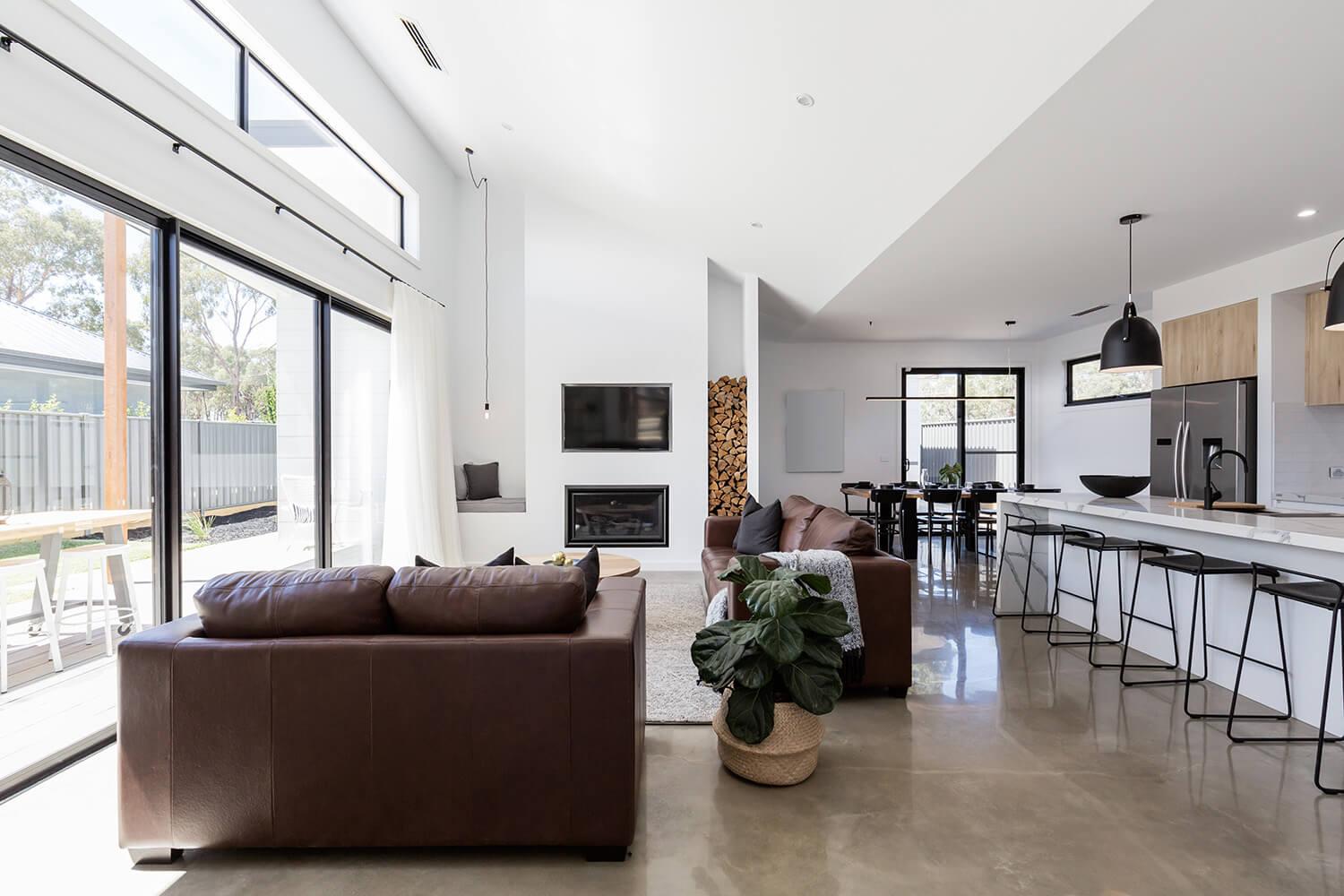
When a commercial building needs a floor that will still be working decades from now, the conversation almost always comes down to two systems: terrazzo and polished concrete. We install both, so we don't have a side to sell — but we do have opinions formed by 68 years of watching floors age.
First cost: polished concrete wins
Polished concrete starts with a slab your building already owns. Grinding, honing, and polishing that slab costs a fraction of a poured terrazzo system, which is why national retailers standardized on it for big-box sales floors. If the budget conversation starts and ends with the construction line item, polished concrete is the answer.
Lifecycle cost: terrazzo wins
Terrazzo pays for itself over a 15–20 year horizon and then keeps going — 40, 50, even 75 years of service is normal. There's no wax, no coatings, no replacement cycle. Over the life of a building, no floor costs less per year than terrazzo. School districts and hospitals, which plan on those horizons, spec it for exactly this reason.
Design: not really a contest
Polished concrete offers dyes, exposed aggregate, and scoring — a handsome, industrial palette. Terrazzo offers essentially unlimited color, divider-strip patterns, logos, mascots, and wayfinding set permanently into the floor. If the floor is part of the architecture, terrazzo is the medium.
Where each belongs
- Polished concrete: warehouses, big-box retail, back-of-house, budget-driven renovations with a sound slab.
- Terrazzo: entrances and lobbies, school and hospital corridors, civic buildings — anywhere traffic is relentless and the building intends to stay.
The honest answer is that many buildings should use both: terrazzo where the public forms its impression, polished concrete where the forklift lives.
Talk it through with us
Bring us your floor plan and your maintenance budget and we'll give you a straight comparison for your building — send us a message or call 260-483-6389.