
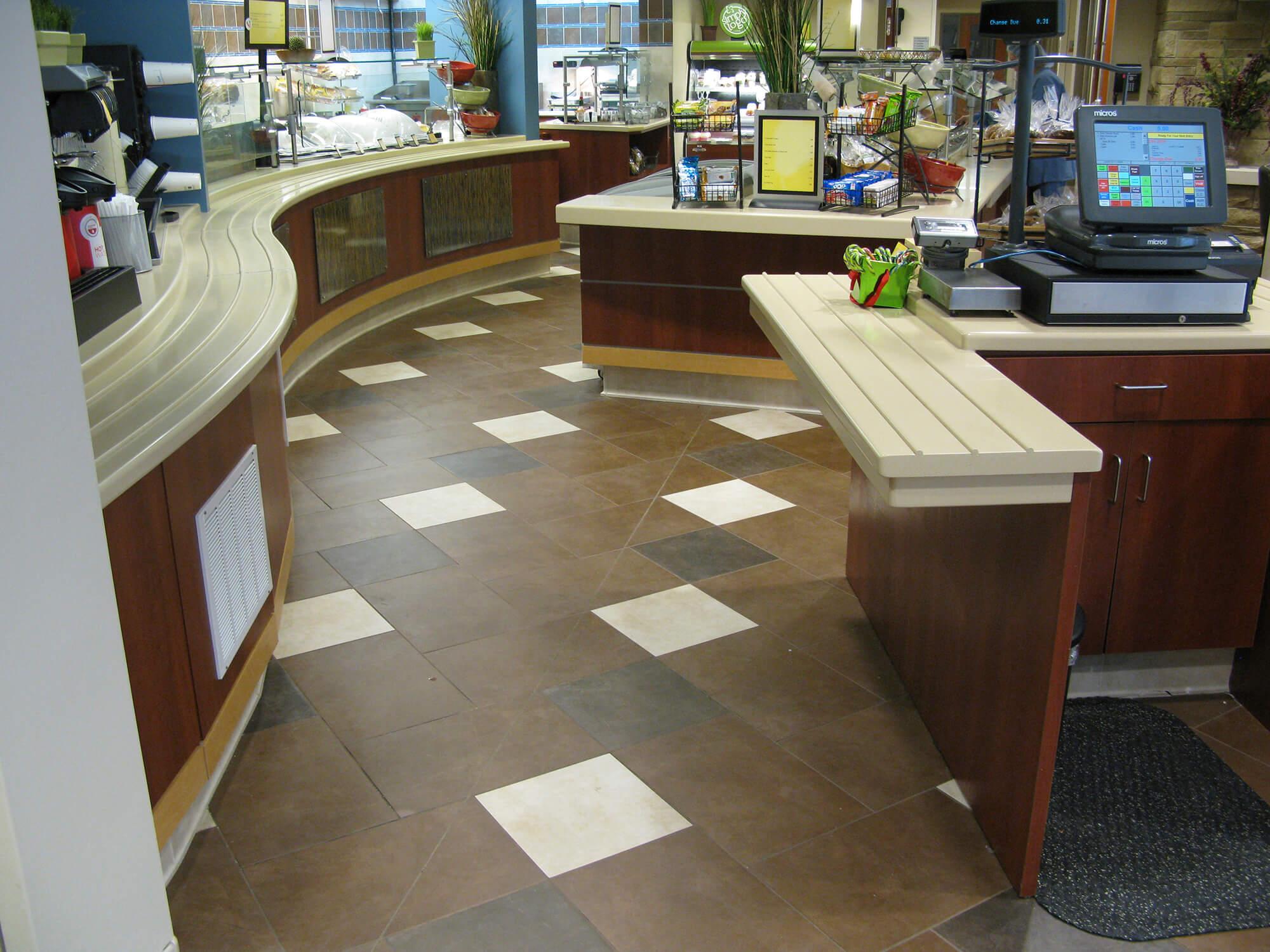
Most commercial flooring doesn't go into empty buildings. It goes into hospitals that never close, stores that open at seven, and schools with 180 days of students. The flooring contractor's real skill isn't just setting material — it's setting material while your operation keeps running around it.
Phasing is the whole game
A good phasing plan divides the work so that every area is either fully open or fully closed, never half-usable. We map phases with your operations staff around the paths people and equipment actually take — including the ones that only show up at shift change.
Night and weekend work
Retail sales floors and healthcare corridors usually mean night work. That changes more than the clock: adhesives and coatings need cure time before morning traffic, materials must be staged where night crews can reach them, and the area has to be returned to service — clean, safe, and open — before the doors unlock. Build cure windows into the schedule or the schedule is fiction.
Containment, dust, and odor
Grinding terrazzo or polishing concrete generates dust; some adhesives carry odor. In occupied buildings we run containment and negative air where it matters, and choose low-VOC systems where occupants are near the work — non-negotiable in healthcare, and increasingly standard everywhere.
What to ask any flooring bidder
- How will you phase this so my operation keeps running?
- What cure times am I scheduling around, honestly?
- What's your containment plan for dust and odor?
- Who is my one phone number when something changes at 2 a.m.?
We've been answering those questions for northeast Indiana facilities since 1958. Send us a message or call 260-483-6389 to talk through your schedule before you commit to it.